


BOOK CULTURE
The second part of the article concludes the analysis of the publications from “Book. Research and Materials” (published in 1959–1991, collections 1–63), devoted to both an “external” and “internal” history of reading. It examines the publications that reveal the history of individual reader biographies and reading practices of prominent figures, as well as materials related to the history of publishing houses, periodicals and individual works with references to information and facts about readership, circulation and cost. Attention to the scholarly legacy of Soviet book study researchers has heuristic value. Their research has brought unique sources related to the activities of Russian Imperial publishing houses – both progressive and ideological (to a greater extent) and commercial (to a lesser one) – into scholarly circulation. Methods for working with documentary heritage have been developed, facilitating the reconstruction of individual readers’ biographies. Studies of the reading practices of prominent political figures have expanded the range of individuals to include those who were tacitly banned in the 1960s and 1970s. We use the unconventional term “practices of reading (readers’ practices) in book studies to characterize the methods and quality of reading, techniques for working with books, and to describe the development of personal libraries, the organization of collections, and the design of printed materials. The results of the research can be used in the future, as the history of reading is a promising direction that allows a comprehensive study of the communicative essence of the book and its role in the history of culture.
The goal of the study to recreate the picture of the presence of SaltykovShchedrin’s works in the funds of Siberian and Far Eastern libraries in the late XIX–early XX centuries. Its tasks are: counting the number of volumes with the writer's works and reconstructing the repertoire of his literary work in the libraries of the region in the pre-revolutionary period. The article presents data on 39 libraries operating in 19 cities of Siberia and the Far East – provincial, regional and county centers. The source base consists on 67 printed library catalogs. On their basis the absence of his works in 5 libraries and the presence in 34 ones are established. The main part of the first group is free people's libraries, the second one are public libraries. For the first time, quantitative indicators of the presence of the writer's works in them are calculated and analyzed. Their funds have included most of the famous works of this author. Most often, they have included editions of individual works and the 12-volume "Complete Works" for different years, repeatedly reprinted by A. F. Marx in St. Petersburg. These data complement previously identified information about the funds of pre-revolutionary libraries of various types in the region, enrich the picture of the development of librarianship with new facts.
The purpose of the article is to reconstruct the history of the formation and functioning of the officer library at the military assembly of the Life Guards of the Horse Grenadier regiment. The analysis of its rules, compiled by the librarian staff captain I. I. Luther (1893), have made it possible to identify indicators of the library's work. They are the procedure for maintaining the library; distribution of financial resources; accounting by the librarian of received books and periodicals and their binding; the role of the statement book; publications that have to be freely available without fail; issuing books for reading; penalties, etc. Based on the memoirs of I. I. Luther, some names of librarians are established and their personal contribution to the development of the regimental library is shown. The author assesses the activities of I. I. Luther himself as a regimental librarian. The catalogs of the library of the regiment's officer collection compiled by I. I. Luther (1890) and Lieutenant P. V. Filosofov (1897) are considered. They have helped to trace the dynamics of replenishment of the library fund, to establish the range of reading interests of cavalry officers and to determine the reasons for the discrepancy between the quantitative indicators of the library fund in two catalogs of books. Revealed is the library of the museum of the regiment, which have contained works, collections, poems and various books stored in the museum; articles and notes, literary and musical works and articles by officers of the regiment, military books and charters. The study clarifies the picture of the history of military librarianship in the Russian Empire and replenishes it with new facts.
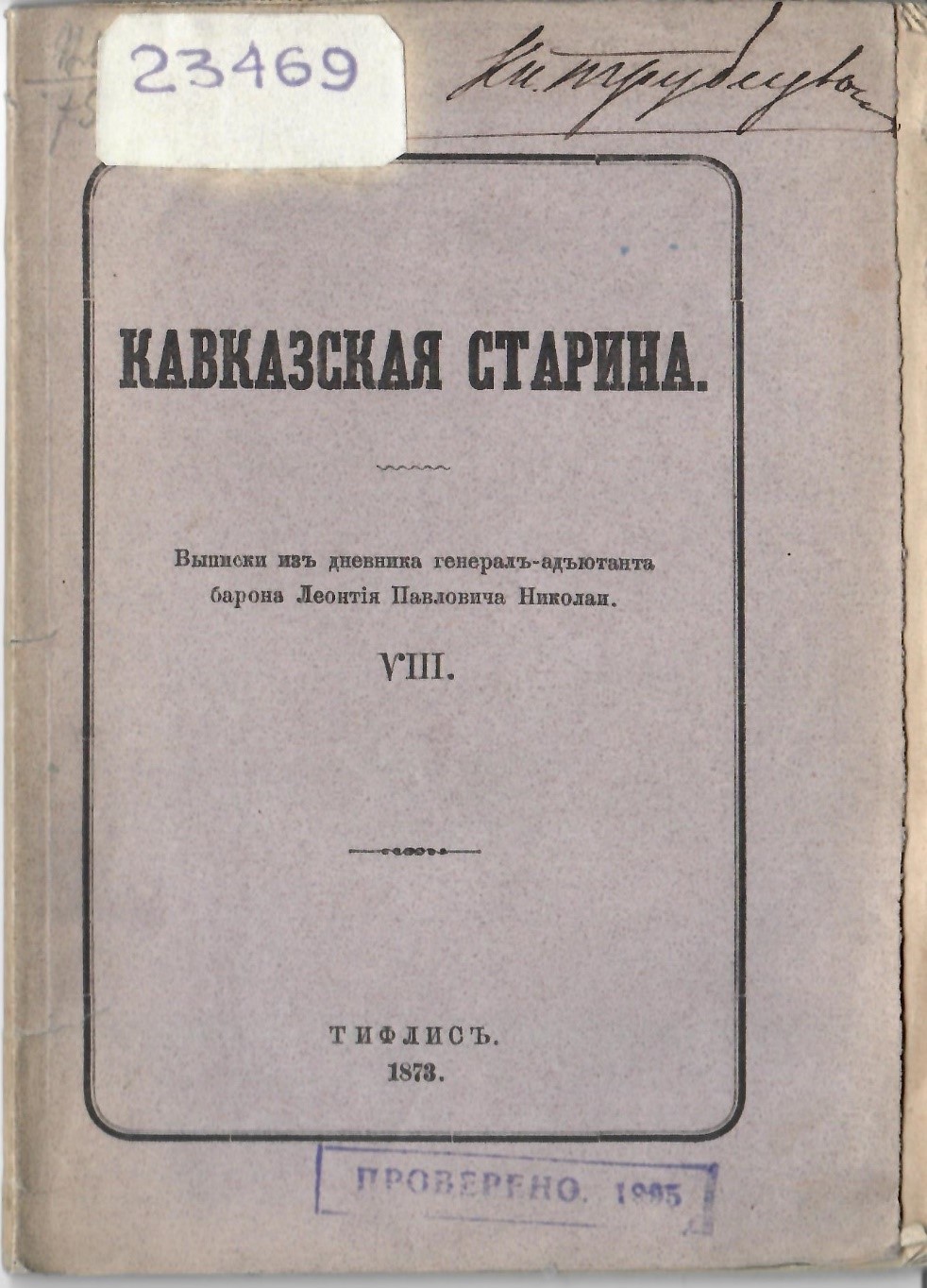
Personal book collections (or their parts) in the funds of military scientific libraries either have not been studied before, or have been partially considered. The Military Historical Library of the General Staff of the Armed Forces of the Russian Federation is the example of the limited knowledge on its fund and the lack of information about the availability of books from personal libraries and their composition. Its fund mainly consists of libraries of military organizations nationalized after the October Revolution, as well as more than 100 personal collections of mostly statesmen. The majority of them are associated with military affairs, including representatives of the Romanov dynasty. Many owners systematized their collections, used artistic ex-libris for their design and fixation of possession. However, not all representatives of the military department were actively engaged in their libraries, as evidenced by the study of copies with proprietary marks. There are significantly fewer books by non–military statesmen in the fund: lawyers, literary critics, historians, etc. Nevertheless, books from their collections represent unexplored historical sources and objects of cultural heritage. Today, the Military Historical Library of the General Staff is in the process of identifying copies with the ownership characteristics of statesmen. 8 673 books have been studied, 1 663 of them have signs of belonging to private libraries. Information about the availability of books in the collection from personal libraries in the context of their possession by statesmen is provided for the first time. The purpose of the article is to introduce into scientific circulation information about the availability of copies from the personal collections of statesmen of the 19th and early 20th centuries in the Military Historical Library of the General Staff of the Armed Forces of the Russian Federation.
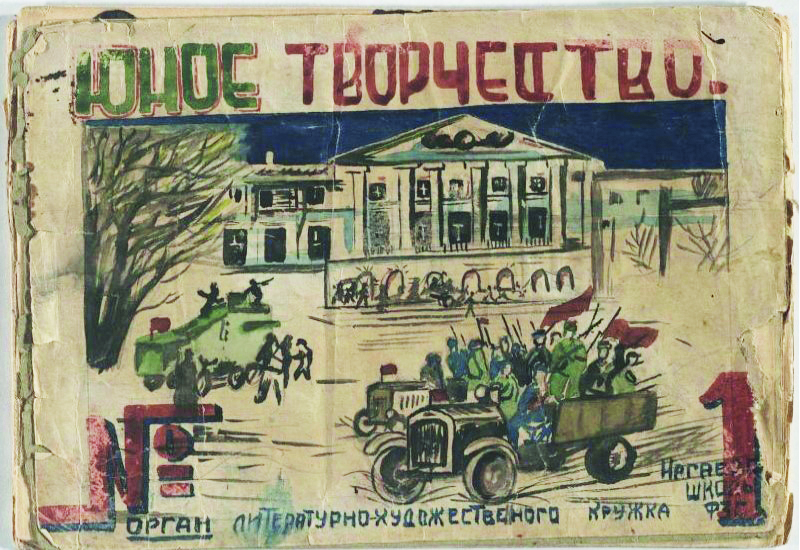
The article examines unofficial printed publications that were first identified in the collections of the State Archive of the Magadan Region, the Magadan Museum of Local History and the Magadan Regional Universal Scientific Library named after A. S. Pushkin. The purpose of the work is to reveal the subject of alternative printing in the designated region, the circulation, authors, and the period of publication. The article attempts to classify unofficial, amateur, low-circulation publications of the Magadan region that are not associated with the official (state) press. The work focuses on printed publications of the second half of the 20th century. A number of the presented publications are introduced into scientific circulation for the first time. Using the examples of alternative printing, the interrelation of information published in these sources (magazine and newspaper articles, literary and artistic materials, etc.) with regional local history, local history and the history of everyday life is traced. Based on the unofficial printed sources identified and introduced into scientific circulation for the first time, the article highlights the preconditions for the formation of print activity in Kolyma, examines the division of publications by genre and thematic characteristics. Examples of literary and artistic publications such as “Molotok”, “Siyanie”, “Prikol LISt” are given. For the first time, the socio-political newspapers “Polyus lyutosti”, “Antikommunist”, “Nabat”, “Pravo na zashchitu”, the military-patriotic almanac “Podvig”, the sports newspapers “Ajsberg”, and “Boks” are introduced into scientific circulation, as well as samples of children's, youth and school press “Magadashka”, “Al'ternativa”, “Pokolenie”. The circulation of publications and the composition of editorial teams are indicated. The role of the unofficial printed materials and samizdat in the regional socio-political, cultural and educational processes of the late 1980s and early 2000s is revealed. The period of the late 1980s is taken by us as a stage of state transformation, “perestroika”, and the eve of the abolition of censorship in the media. The period of the early 2000s was due to the availability of smallprint media and the growing popularity of alternative print media. The article establishes the interrelationships between alternative publications in the sociocultural space of the Magadan region. Examples of modifications of certain unofficial publications such as the almanac “Podvig” are given.
LIBRARY WORLD
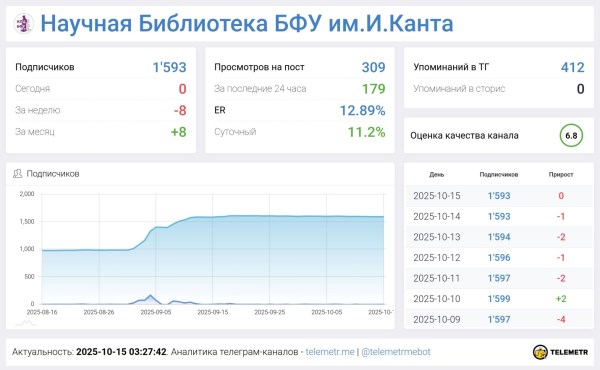
This paper analyzes the mechanisms for integrating social media into library services, with a particular focus on attracting young audiences. The aim of the article is to study the net marketing experience of the Cultural and Educational Center (CEC) of Immanuel Kant Baltic Federal University and propose ways to successfully integrate it into library practice. It examines ways to implement the educational function of libraries in the digital age, amid competition for user attention with entertainment c0ntent and social media. It describes the activities of the CEC, whose primary communication channels are the network VKontakte and the Telegram messenger. The article analyzes statistical data from the IKDFU Cultural and Educational Center’s on VKontakte page and the Center’s content objectives. It emphasizes the importance of considering the specifics of each platform and focusing content on the interests of young people. It mentions project work within the Priority-2030 program, including the implementation of “Materiality of Books” project and cooperation with the scientific community to create unique content. The successful activities of the University's Cultural and Educational Center demonstrate that positive dynamics in cultural and educational work, based on the active influence of internet technologies, are critical for improving the library’s image and expanding its readership.
The article reveals theoretical and methodological approaches to innovative and project activiries of modern libraries. Relevance of research is conditioned by the necessity of comprehension of the problem field of library project planning in modern library science, by the demand to have a new transdisciplinary research strategy in this scientific area. The aim of the article is to show the perspective directions of studying innovative and project activity of libraries. Special attention is given to the subject of social and cultural project planning, to the problem of typological structure of projects of social importance, to the project culture of a library specialist as an independent direction of library project theory. The author characterizes project culture and its key component «cultural thinking» in the context of inculturation of a personality and institualization of libraries social and cultural project activities, forecasts their segregation into a separate direction of library higher education.
Today, as the information society evolves and libraries undergo digital transformation, there is a pressing need to find a balance between the vast volume of electronic information and the personalized needs of users. Existing traditional information retrieval models are no longer able to cope with the complex networks of user interactions with information resource objects and do not fully explore the deep connections between user preferences and content. The purpose of this study is to review modern technologies for implementing information retrieval in libraries using neural networks and artificial intelligence. The analysis of international models – graph neural networks, deep neural networks based on embedding, neural collaborative filtering, singular value decomposition, relational graph hyperfine networks, hybrid K-nearest neighbors, deep neural networks, and hyperfine neural networks – has identified key implementation criteria for these models, namely: architecture specifics, accuracy metrics, performance evaluation, implementation methodology, library type and type, conceptual authors, and other criteria. As a result of the conducted analysis, it is proposed to create a model that will combine traditional technologies of automated library and information systems with integration into a complex neural network model with algorithms that allow taking into account the personalized needs of users.
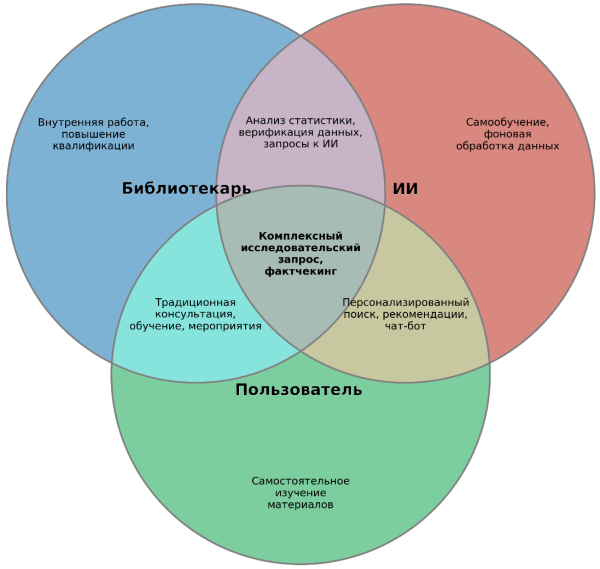
This article deals the transformation of library communication amid the development of artificial intelligence (AI) technologies. The relevance of the research is connected with the need to reconceptualize traditional interaction models within the library system and to integrate AI as a new (instrumental) subject of communication. A conceptual communication model of the “Librarian – Artificial Intelligence – User” (LAIU) system is proposed, in which AI is treated as a participant in the communication process. The study is grounded on the analysis of theoretical approaches from the fields of law and philosophy (regarding the status of AI), library science (concerning the integration of AI into the library as a system), and the mass communication theory (in the context of modeling interactions between agents). The primary research methods employed are theoretical analysis and modeling. The article provides concrete examples of various interaction scenarios within the proposed model. It is demonstrated that implementing this model can not only optimize existing processes but also create new forms of interaction, thereby enhancing the quality of library services and user satisfaction. This work is the first in the field of library science to propose and substantiate a communication model that describes the complex system of interrelations among the librarian, AI and the user, and also the author’s definition of “instrumental subject” is given. The limitations and potential challenges of its implementation are also examined.
SCIENTIFIC ARCHIVE
The purpose of this article is to analyze the creative legacy of the Russian photographer of the late 19th and early 20th centuries, A. A. Nasvetevich, which is stored in the collections of the Information Historical and Scientific Center – the Military Historical Library of the General Staff of the Armed Forces of the Russian Federation, as well as in the collections of museums, archives, and libraries in Russia. This is due to the fact that the rather extensive legacy of A.A. Nasvetevich, who worked in the genre of documentary, portrait and species photography, has been little studied, as it is dispersed in albums, sets and individual photographs on the funds of various institutions. The subjects of his photographic images are objects of architecture, city landscapes, portraits of contemporaries, various solemn events with the participation of members of the imperial family, scenes from the life of the Russian army. In some cases, the available photographs are not described, which means they have not been put into public and scientific circulation. The fund of the Information Scientific Reference Center of the Military Historical Library of the General Staff of the RF Armed Forces contains a folder with previously unknown photographs of A. Nasvetevich, which have to be studied. This article reflects the first stage of scientific work to identify previously unknown photographs that expand the range of visual sources related to the history of the royal family in the late 19th and early 20th centuries, as well as a number of historical events of that time. The source base for the preparation of the article are books and periodicals, websites of museums, archives, libraries, unpublished documents, correspondence with leading experts in the field of the history of photography.
INFORMATION

ISSN 2712-7931 (Online)


