


LIBRARY WORLD
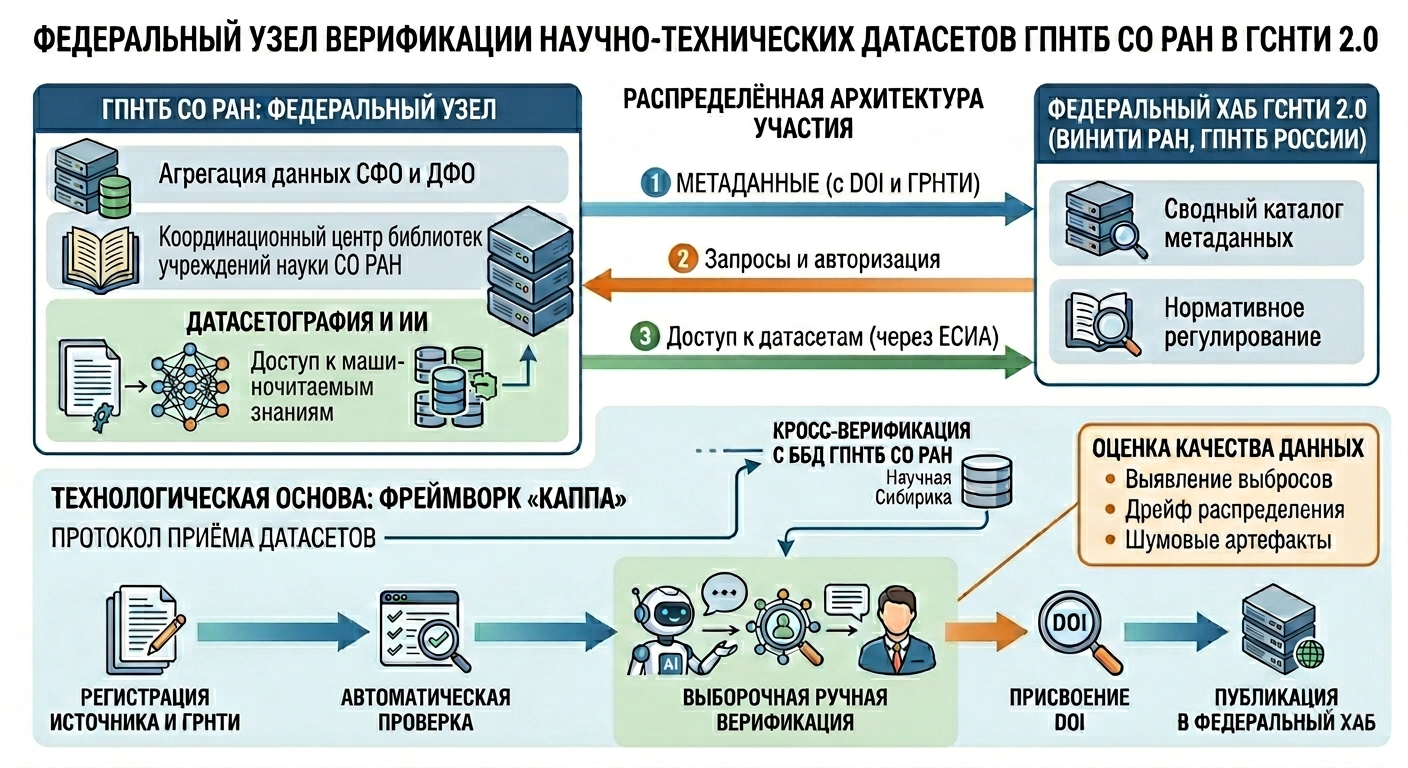
The aim of this article is to present the role of the State Public Scientific Technological Library of the Siberian Branch of the USSR Academy of Sciences / Russian Academy of Sciences (SPSTL SB RAS) a center for scientific and technical information and the largest scientific and technical library in Siberia and the Far East in the formation and development of the State System of Scientific and Technical Information (SSSTI) from 1960 to 2022. The study justifies the feasibility of including the SPSTL SB RAS among the participants of the reformed SSSTI (2025–2026), provides arguments demonstrating that the library can serve not merely as a custodian of informational holdings and the largest user of the SSSTI, but also as an active participant integrating its unique information products onto a newly established unified platform. Furthermore, the article identifies which functions could be assigned to the SPSTL SB RAS within the SSSTI 2.0 paradigm. As research methods, the authors employed generalization, functional analysis, and content analysis. To assess the library’s capabilities and define its objectives amid the fundamental reorganization of the SSSTI in 2025–2026 and the implementation of the federal project on the development of scientific and technical libraries in research organizations, higher education institutions, and additional professional education organizations, the authors utilized materials from the strategic session “AI for Libraries or Library for AI,” held at the library on February 20, 2026.
The article is devoted to the analysis of practical and research activity of Russian and foreign libraries in the context of participatory approach. The participatory approach, which became widespread in the 1960–1970s within the framework of participatory management, is considered to be one of the methodological instruments that contribute to the goals of libraries achievements and their main functions implementation. The participatory approach is focused on the engagement of various social-demographic groups of population to the implementation of professional library process together or under the guidance of library specialists. Its main vectors usage, advantages and limitations are determined. Research programs based on participatory approach with using qualitative, quantitative, and mixed methodology are analyzed. The main issues of participatory researches performance are underlined. The importance of participatory approach in developing libraries strategies, in pointing out innovations for local community is underlined. Interpersonal interactions between librarians and users contribute to the preservation of social norms and rules, and to the reinforcing of social values. Participatory projects implemented in libraries ensure the socialization of individuals, help them to achieve their goals and create new possibilities for movement towards further constructive social changes in other areas. Thus, library provides a constructive impulse for changing social reality and influences the creative vectors of social development. The role of information and communication technologies in the development of participatory approach is emphasized.
The integration of artificial intelligence (AI) into academic libraries raises critical questions regarding professional responsibility and ethical decision-making. This study examines the ethical readiness of academic librarians in Hanoi, Vietnam, by analysing the relationship between awareness of AI ethical principles and ethical judgment capacity (EJC). Data were collected from 68 librarians across six universities using purposive convenience sampling. Correlation analysis shows that awareness of accountability, data privacy, transparency, and fairness is positively associated with EJC at the 0.01 level. Data privacy demonstrates the strongest correlation (r = .705), followed by accountability (r = .691), transparency (r = .653), and fairness (r = .594). Multiple regression analysis indicates that the model is statistically significant (F(4, 63) = 23.904, p < .001), explaining 60.3 % of the variance in ethical judgment capacity (R² = .603). When considered simultaneously, only data privacy (β = .415, p < .001) and accountability (β = .319, p = .030) remain significant predictors. The findings suggest that AI ethical principles do not operate uniformly in practice; responsibility oriented dimensions appear more influential than procedural principles such as transparency or fairness. By providing empirical evidence from a developing country context, this study contributes to ongoing debates on AI ethics in library and information science and highlights the importance of strengthening data governance and professional accountability in AI-mediated services.
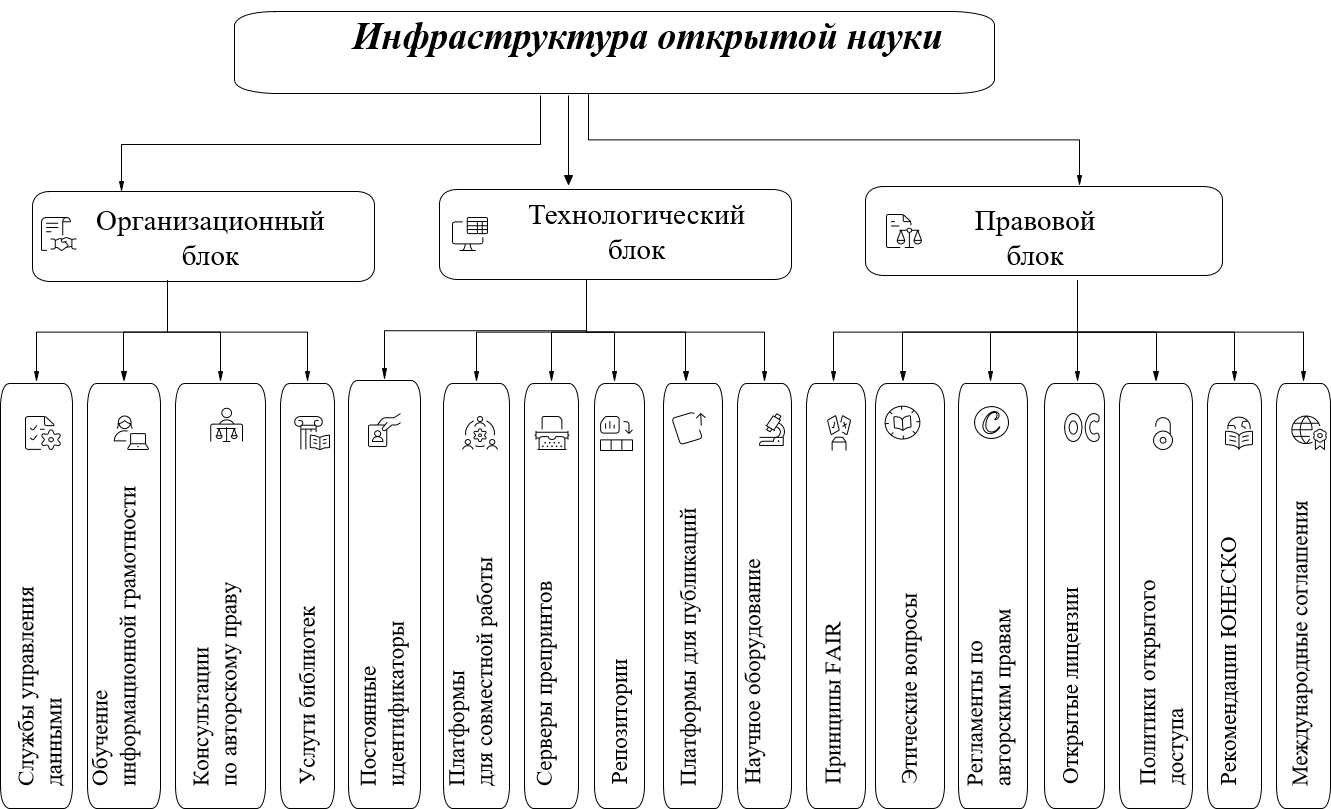
The concept of Open Science (OS) is being actively developed through the efforts of its key actors which constitute the OS information ecosystem. The purpose of the study is to substantiate the areas of research library activity within the open science information ecosystem taking into account the interaction with other actors. To achieve this goal, the following tasks are solved: 1) analysis of the interaction vectors of the main actors of the open science information ecosystem (scientific foundations, publishers, research libraries, scientific organizations), 2) identification of best practices (separate directions) of libraries on developing the open science information infrastructure, 3) determination of the development of research libraries as actors in the open science information ecosystem. Significant information and technological changes associated with the development of OS infrastructure have been identified. These changes are transforming information and research library services, impacting users’ information needs (open publications, compliance with publisher and research funder requirements for providing primary research data, etc.), and imposing new qualification requirements on library professionals. It is concluded that for research libraries, the development of the open science information ecosystem leads to not only an expansion of traditional library services but also the adoption of a range of new roles and functions: developing auxiliary models for research data management, creating information support services for open research, integrating library services into the research and educational process, promoting scientific results, etc. Based on an analysis of global practices in research library activities in the open science information ecosystem, directions for its development as an actor in the open science information ecosystem are identified and presented. Such a library, through active interaction with other actors and the required level of qualifications, is capable of effectively performing the functions assigned to it in accordance with the changing needs of users.
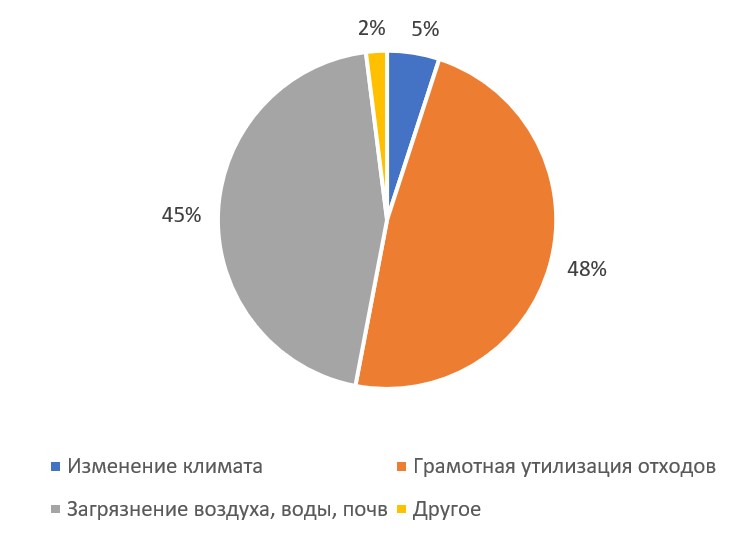
The libraries world wide consider climate change as a threat to preserving their collections and information itself in general. The libraries become a serious force in creating public opinion, supporting relevant scholarly research, assisting population in pulling through the difficulties related to this global ecological problem. Authors present the results of the study on libraries’ participation in the processes of adaptation to climate change. World library community pays a serious attention to this problem. The goal of the study is to determine real opportunities and prospects for libraries’ activities in this field. The objective of the study is to evaluate the significant experience of libraries. The basic methodology of the study is investigating literature available in publicly accessible sources. The authors studied IFLA materials, related publications by foreign scholars, as well as the results of the survey of Russian libraries run by the Group of the projects in ecology and sustainable development at the Russian National Public Library for Science and Technology. It is concluded that the world library community realizes the problem of climate change and adaptation to its results as one of the major ecological problems. The libraries are in a position to participate in this process actively. The authors assure that digital transformation promotes equal access to libraries’ digital space and consequently population’s adaptation to climate change results. The libraries are offered several steps in this direction. Their efficiency is directly linked to the use of innovation technologies at the libraries and cooperation with power bodies.
The aim of the article is to present and substantiate the methodology of a new structure unique to libraries, the Multidimensional Modeling Laboratory, as a professional tool aimed at expanding the range of information materials in formats accessible to blind users. Some approaches to completing objective representations of the surrounding world and ensuring semantic accessibility of texts for blind readers using interdisciplinary research methodologies are considered The relevance of establishing points of contact between psychological, pedagogical and library approaches is indicated, as well as the need to integrate the terminology of the semiosphere and typhoid library practice. The paper gives theoretical substantiates and describes the structure, activities and methodological base of the Laboratory of Multidimensional Modeling. The article proposes an approach which formalizes the processes of fixing and evaluates the results of designing and testing tactile and auditory analogues of visual objects by means of a semiotic formula, which is adapted with the account of the element of non-visual interpretation. The practical significance of the work is reflected in the examples of the implementation of design and research tasks for the creation of multi-format publications and expositions combining typhlocomments, ekphrasis, relief graphics and 3D models and aimed at expanding the range of both working methods and information resources in non-visual formats, ready for use in library, information, exhibition and educational activities.
The organization of family reading is a strategically important area of library activity, but as the analysis shows, the system of working with families in this context has not yet been properly formalized. Despite the existence of theoretical models and methodological recommendations developed by practicing specialists, the issues of organizing family reading continue to be in the focus of attention for the scientific and professional community. In modern information society where one can observe the decline of youth reading habits, the reviving of family reading traditions becomes particularly relevant and important for the intellectual and emotional development of children and teenagers. This article presents the project activities of libraries in the Krasnodar Region aimed at forming the of family reading, as well as to describe the development rationale for the “Book, Family, Summer” project. The article analyses the concepts of “reading” and “family reading” and summarizes the Russian State Children’s Library’s experience on organizing children and family reading. The study has resulted in recommendations to optimize library projects at creating favorable conditions for family reading. These recommendations can be used by children’s libraries to improve their efficiency and public appeal.
BOOK CULTURE
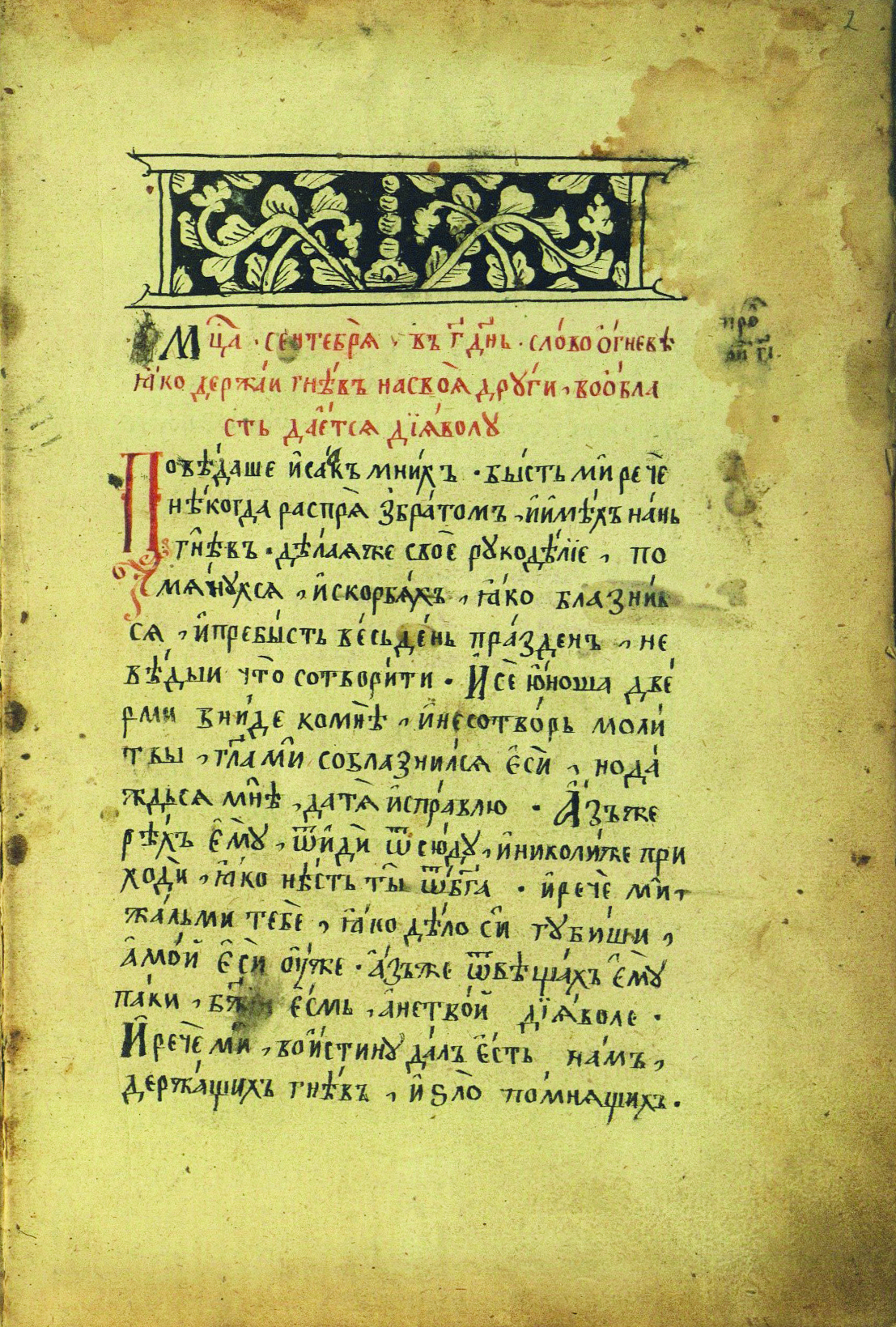
The purpose of this article is to characterize a genre modification of the Old Russian collection "Prologue", represented by an Old Believer manuscript from the late 18[th century in the collection of M. N. Tikhomirov (State Public Scientific Technological Library of the Siberian Branch of the Russian Academy of Sciences). The novelty of this study stems from the lack of specialized scholarly works devoted to the use of this anthology in the late tradition, as well as the introduction of a manuscript containing readings from “The Prologue”, which has been preserved and used in Old Believer circles. Its codicological features (format, paper watermarks, handwriting) are characterized; based on the analysis of the composition of the collection, the design of the main text and marginalia, it is established that its source is the Moscow edition of “The Prologue” of 1642. The genre specificity of the miscellany is revealed; the compiler has not reproduced the text of the publication in its entirety, but selected individual readings, primarily sermons and lives of Russian and South Slavic saints. Examples of similar and contrasting relationships between hagiographic and hagiographic texts are presented in other collection of articles from the 18th-century Prologue. A conclusion is drawn regarding the existence in the late manuscript tradition of a type of manuscript in which the general structure of the collection is preserved but its composition, defining its genre specificity, changes, the dominant focus being hagiographic or didactic readings.
V. S. Lyublinsky is an outstanding medieval historian, bibliologist, and specialist in paleography and the restoration of written monuments, who has worked for many years at the M. E. SaltykovShchedrin State Public Library. The figure of this scholar is of considerable interest not only because of his fundamental academic contributions, but also as an example of resilience under the most severe conditions of wartime. The primary aim of this article is to examine the scholar’s inner world, his experiences, everyday concerns, and intellectual aspirations during the first months of the siege of Leningrad. The principal source for this study consists of previously unpublished letters by V. S. Lyublinsky, written in Leningrad during the Great Patriotic War and preserved in the scholar’s personal archival fond in the Manuscripts Department of the National Library of Russia. The article presents and analyzes selected fragments of his correspondence with his wife, Alexandra Dmitrievna Lyublinskaya, who was in evacuation from 1941 to 1944.
DISCUSSIONS
This article examines the phenomenon of informal education as a key component of continuous professional development, particularly in the context of research. The aim of the study is to define the concept of “informal education of researchers” and identify the role of libraries in this process. A terminological analysis of domestic and international literature has resulted in the following definition: this is a purposeful and professionally significant cognitive activity, regulated by a researcher him(her)self, aimed at acquiring new knowledge and skills (especially in the context of open science), using information and communication technologies in a digital environment, and characterized by awareness, consistency, and independence. Particular attention is given to the transforming role of scientific libraries in this process – in the digital age, they are becoming active content providers and multifunctional educational centers. Libraries not only provide access to resources but also offer various services, including training in information literacy and research data management, support for publication activities, and assistance in using digital tools. The “Library for Open Science” platform (State Public Scientific and Technological Library of the Siberian Branch of the Russian Academy of Sciences) is cited as a successful practical example, demonstrating how comprehensive online services, guides, and training materials support the informal education of scientists. It is concluded that integrating libraries into informal education is a necessary condition for improving the effectiveness of scientific research.
INFORMATION


ISSN 2712-7931 (Online)


